Imagine finishing a meal only to find your kitchen sink filled with murky water and a rising, foul odor. It is a common frustration that halts your kitchen workflow and triggers the fear of an expensive repair bill. You likely feel stuck between a smelly mess and a high service fee. Knowing what to do if your garbage disposal is clogged is the difference between a quick recovery and a ruined evening. Most homeowners assume a humming motor or standing water means the unit is broken. Usually, it is just a manageable jam waiting for the right expert approach.
You do not have to reach for your phone just yet. This guide will teach you how to safely diagnose the issue and use professional-grade techniques to clear the obstruction yourself. We will walk through motor preservation and show you how to troubleshoot the flywheel without risking your safety. By following these systematic steps, you can restore your sink’s drainage and learn the specific habits that keep your disposal running for its full fifteen-year lifespan. Let’s get your kitchen back in order with a clear, functional sink and total peace of mind.
Key Takeaways
- Prioritize safety by learning how to distinguish between a mechanical jam and a pipe blockage while adhering to the strict “no hands” rule.
- Master the manual unjamming process using a hex wrench to safely rotate the grinding plates from the bottom of the unit.
- Learn what to do if your garbage disposal is clogged with standing water, including how to use the “plunger method” to clear downstream blockages.
- Extend your appliance’s lifespan by following the Cold Water Rule and avoiding fibrous or starchy food items that cause recurring clogs.
- Identify the critical warning signs of motor failure, such as persistent humming or internal leaks, that signal it is time for professional repair.
Table of Contents
- Immediate Safety Protocols and Identifying the Clog Type
- The Step-by-Step Manual Unjamming Process
- Clearing Standing Water and Downstream Pipe Blockages
- Maintenance Strategies to Eliminate Recurring Clogs
- Recognizing Motor Failure: When Professional Repair is Essential
Immediate Safety Protocols and Identifying the Clog Type
A garbage disposal unit is a robust piece of machinery, but it is not invincible. Before you attempt any repairs, you must identify exactly what went wrong. A clog usually falls into one of two categories. It is either a mechanical jam, where the grinding plates are stuck, or it is a physical blockage in the discharge pipe. Knowing the difference is the first step in determining what to do if your garbage disposal is clogged. This diagnostic phase is essential for deciding your next move without causing further damage to the motor or your plumbing.
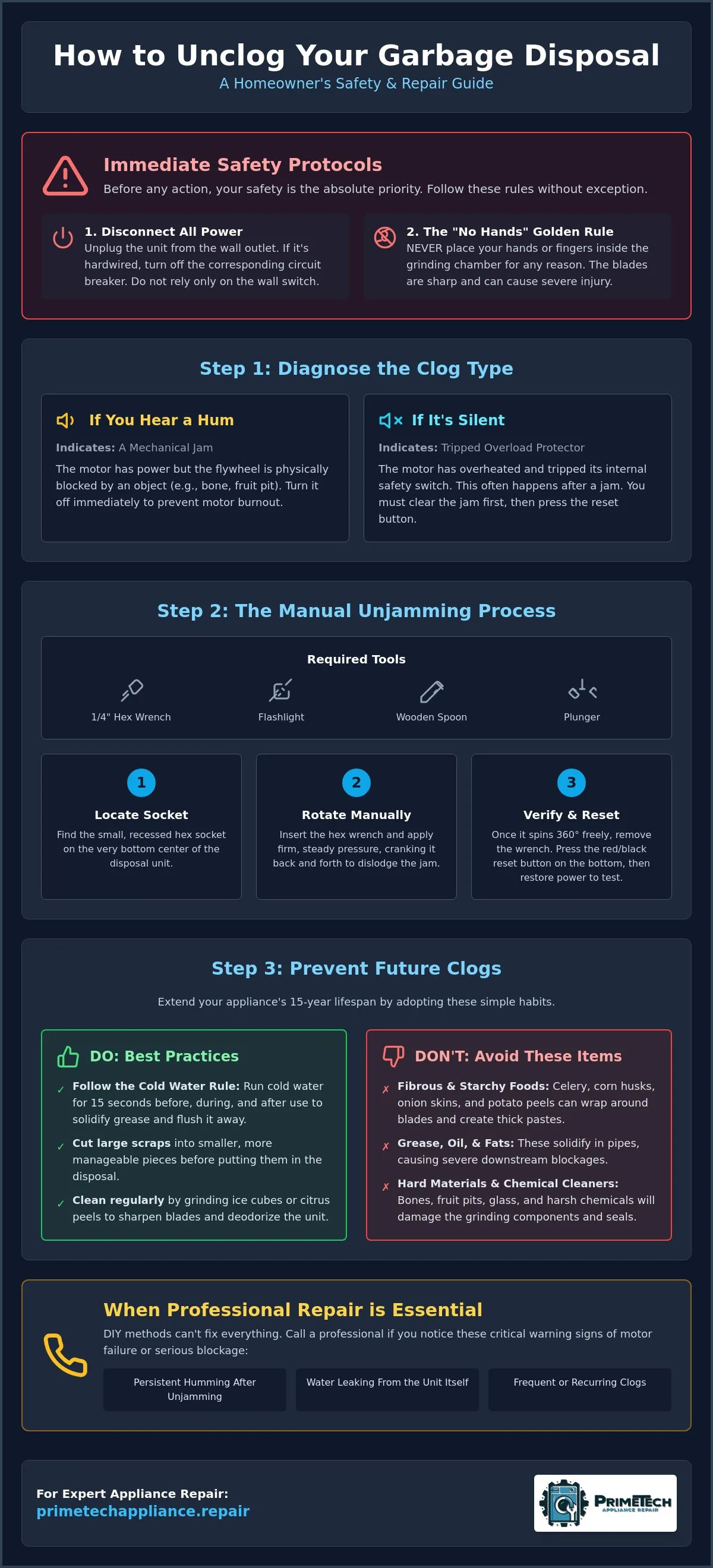
Safety is the absolute priority during this process. Follow the “Golden Rule” of appliance repair: never place your hand inside the disposal. Even if the unit is turned off, the internal components are sharp. They can cause severe injury if the motor suddenly engages or if the flywheel snaps back after a jam is cleared. To eliminate this risk, disconnect the power completely. Unplug the unit from the wall outlet under the sink. If your disposal is hardwired, locate your home’s circuit breaker and flip the switch to the off position. Do not rely solely on the wall switch; accidental activation is a common cause of household injuries.
The “Humming” Test: What Your Disposal Is Telling You
Listen closely to the unit before you disconnect the power. If you flip the switch and hear a low, rhythmic humming sound, the motor is receiving electricity but cannot rotate. This indicates a physical obstruction is wedged between the impeller arm and the grind ring. Turn the unit off immediately. Leaving a humming disposal on for more than a few seconds will overheat the motor and likely burn it out. If the unit is completely silent, the internal thermal overload protector has probably tripped. You will need to check the reset button on the bottom of the unit once you are sure the power is disconnected and the jam is addressed.
Tools You Will Need for the Job
Gather your equipment before you begin. Most repairs require only a few basic items you likely already have in your garage or utility closet. Efficiency is key when you are dealing with a kitchen backup, so have these ready:
- 1/4-inch hex wrench: Also known as an Allen wrench, this is used to manually rotate the motor from the bottom of the unit.
- High-lumen flashlight: You need clear visibility to inspect the interior of the grind chamber for small, hard objects.
- Wooden spoon or dowel: This provides a safe way to move the impellers from above without using your hands.
- Sink plunger: Essential for clearing standing water or debris from the discharge pipe.
Do not use chemical drain cleaners. These caustic liquids are ineffective against mechanical jams and can severely damage the rubber seals and plastic components inside your unit. They also create a safety hazard for any professional who might need to work on the unit later. Stick to mechanical troubleshooting for the best results.
The Step-by-Step Manual Unjamming Process
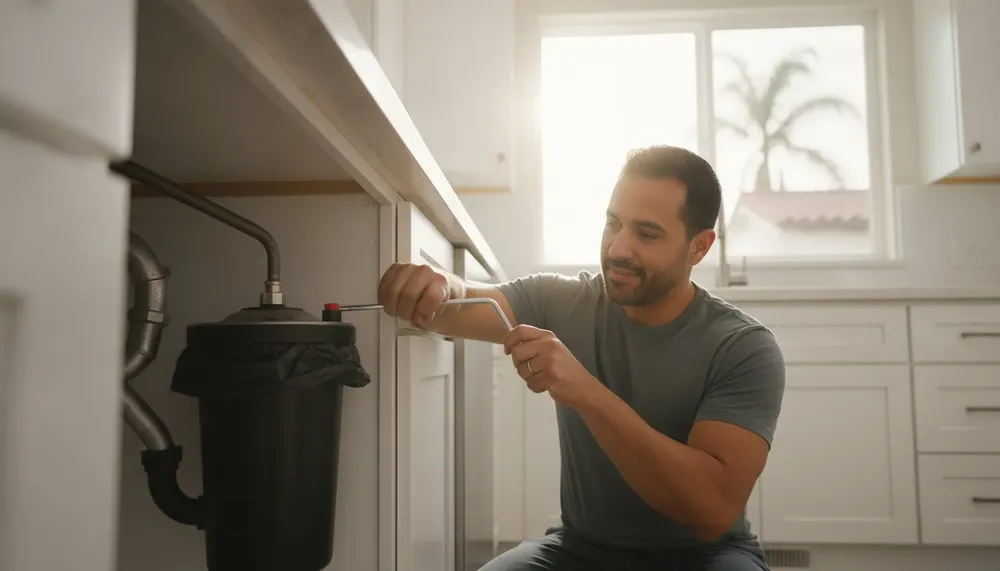
Once you have secured the power, it is time to address the physical obstruction. Many homeowners panic when the blades stop, but knowing what to do if your garbage disposal is clogged often involves a simple manual override. Look directly at the center of the bottom of the disposal unit under your sink. You will find a small, recessed hex socket. This socket is connected directly to the motor’s drive shaft, allowing you to bypass the electrical system to move the internal components. For a visual walkthrough of this specific mechanical layout, you can consult this .
Insert your 1/4-inch hex wrench into the socket. Apply firm, steady pressure in a back-and-forth motion. This cranking action forces the flywheel to rotate against the jam, eventually dislodging the stuck item. If the wrench feels completely frozen, do not use a hammer to force it. This could damage the motor housing or snap the drive shaft. Instead, try backing the motor up in the opposite direction. Often, reversing the rotation is the only way to free a forward-facing obstruction like a fruit pit or a small bone. Continue this process until the flywheel spins 360 degrees freely without any resistance.
Using the Hex Wrench Correctly
Hard jams require significant torque to break. If your model does not feature a bottom hex socket, you can achieve similar results from above. Insert a sturdy wooden spoon or dowel through the sink opening and place the end against one of the metal impellers. Use the side of the drain as a fulcrum to pry the flywheel until it moves. To verify the jam is fully cleared, use your flashlight to inspect the grind chamber. You should see the impellers moving loosely on the flywheel. If you still feel a “catch” during rotation, a small piece of debris is likely still wedged in the grind ring.
Resetting the Internal Circuit Breaker
The red button on the bottom of your unit is a thermal overload protector. It is designed to pop out and cut power when the motor overheats from a jam. You must wait at least 5 to 10 minutes for the motor to cool down before attempting a reset. If you press it too early, the button will not stay engaged. Once the unit is cool, press the red button firmly until you hear a distinct click. If the button refuses to stay “clicked” in after a cooling period, the motor may have suffered an internal short. In these instances, professional garbage disposal repair is the safest way to evaluate if the unit is still salvageable.
Clearing Standing Water and Downstream Pipe Blockages
If you have cleared the flywheel jam but the water still refuses to drain, the obstruction is likely located further down your plumbing line. This is a critical distinction to make when determining what to do if your garbage disposal is clogged. Standing water indicates a physical blockage in the P-trap or the discharge pipe rather than a mechanical failure of the unit itself. While many online forums suggest using boiling water to clear grease, avoid this method. Water exceeding 140 degrees Fahrenheit can soften PVC pipes and melt the wax seals in your drainage system. Stick to mechanical pressure and safe chemical reactions to move the sludge.
The “Plunger Method” is your first line of defense for standing water. A flat sink plunger creates a vacuum seal that pulls debris back toward the disposal, breaking up the mass. If the clog is stubborn, you can use a mixture of one cup of baking soda followed by one cup of white vinegar. This creates a foaming action that helps dissolve organic buildup without damaging your pipes. Let it sit for 15 minutes before rinsing with warm, not boiling, water. If these steps fail, you will need to inspect the physical connections under your sink.
The Proper Way to Plunge a Double Sink
Plunging a double sink requires a specific technique to ensure the pressure actually reaches the clog. If you leave one side open, the air and water will simply take the path of least resistance and shoot out the other drain. Use a wet rag or a heavy stopper to seal the non-disposal drain completely. Use a flat sink plunger rather than a bell-shaped toilet plunger, as the flat rim creates a tighter seal against the sink bottom. The P-trap is the U-shaped pipe designed to trap debris and sewer gases. Forceful, rapid strokes will create the necessary turbulence within this trap to dislodge the blockage.
Cleaning the Discharge Pipe
When plunging fails, you must disassemble the discharge pipe to reach the source of the trouble. This pipe connects the side of your disposal to the rest of your home’s waste line. Start by placing a bucket directly under the pipes to catch the “gross water” and debris that will release once the seal is broken. Use a screwdriver or pliers to remove the bolts connecting the discharge tube to the disposal body. Inspect the small inlet where the dishwasher drain hose connects. This narrow port is a common collection point for food scraps and is frequently the culprit behind a slow-draining sink. Use a small brush or a flexible wire to clear any visible gunk before reassembling the unit with fresh seals.
Maintenance Strategies to Eliminate Recurring Clogs
Preventing a backup is significantly easier than clearing one. The most effective habit you can adopt is the Cold Water Rule. Always run high-volume cold water before you activate the unit, during the grinding process, and for at least 30 seconds after the motor stops. Cold water is essential because it keeps fats and oils in a solid state. This allows the blades to chop them into small particles that flush through the system. Hot water melts these substances, allowing them to coat the interior of your pipes and cool into a thick, impenetrable sludge later.
In areas like Orange County, the local hard water adds another layer of complexity to appliance care. High mineral content creates scale buildup on the grinding components. This scale makes the surface of the grind ring sticky, allowing food waste to adhere and eventually cause a jam. Periodically grinding citrus peels provides a mild acid that helps break down these deposits naturally while freshening the air in your kitchen. If you find yourself constantly searching for what to do if your garbage disposal is clogged, mineral scale might be the hidden culprit.
The “Never-In” List for Disposal Longevity
Your disposal is not a trash can. Certain items are notorious for causing mechanical failures and plumbing disasters. Eggshells and coffee grounds should always go in the compost or trash. These materials act like sandpaper on your pipes, creating a gritty residue that traps other debris. Pasta and rice are the leading causes of late-night plumbing emergencies because they continue to expand in the trap. Fats and oils solidify in cold pipes, creating “fatbergs” that require professional hydro-jetting. Knowing what to do if your garbage disposal is clogged is helpful, but avoiding these items is the only way to ensure long-term reliability.
Monthly Cleaning Routine
A proactive cleaning schedule extends the life of your motor and prevents odors. Once a month, grind a handful of ice cubes and a half-cup of rock salt. The ice knocks organic buildup off the flywheel while the salt scours the grind chamber. Follow this with a few lemon or orange rinds to neutralize bacteria. While you are performing this routine, take a moment to inspect the mounting ring and discharge connections for leaks. A small drip can lead to significant water damage over time. If maintenance is not enough to stop the backups, it is time for a professional garbage disposal repair to ensure your unit is still mechanically sound.
Recognizing Motor Failure: When Professional Repair is Essential
Sometimes, even the most diligent troubleshooting cannot overcome a deep-seated mechanical failure. While earlier sections focused on what to do if your garbage disposal is clogged with debris, you must also recognize when the motor itself has reached its limit. A persistent humming sound that continues after you have cleared a jam indicates an electrical fault rather than a physical obstruction. If you notice smoke or a sharp, metallic burning smell coming from under the sink, the motor windings have likely shorted. Turn off the power immediately; do not attempt to restart the unit once a thermal event has occurred.
The “Leak from the Bottom” Rule is a definitive diagnostic signal for homeowners. Identifying what to do if your garbage disposal is clogged becomes a different challenge when the issue is structural. If water is dripping from the actual base of the disposal housing rather than the plumbing connections, the internal impeller seal has failed. This allows water to enter the motor chamber, causing irreversible corrosion and significant electrical hazards. In these cases, the unit is usually no longer safe to operate without expert intervention.
Repair vs. Replacement: The Cost-Benefit Analysis
High-end luxury disposals represent a significant investment in your kitchen’s infrastructure. Unlike entry-level models, these sophisticated units are often designed with modular components that can be serviced by a professional. A simple gasket or seal replacement can save a high-end unit costing $500, making professional diagnostics a financially savvy choice compared to a full replacement. DIY installation of a new unit carries its own risks. Improper mounting leads to excessive vibration, electrical shorts, or slow leaks that can rot your cabinetry over time. PrimeTech technicians verify the motor health and electrical draw of your current unit before recommending any major changes.
Professional Solutions in Orange County
PrimeTech Appliance Repair provides a calm, expert presence during domestic emergencies. We understand that a broken disposal disrupts your entire household rhythm and creates unnecessary stress. Our team specializes in garbage disposal repair for all major manufacturers, ensuring your kitchen remains functional and odor-free. We prioritize transparent pricing and reliability, standing behind our work with a written repair warranty. Our goal is to restore your peace of mind with efficiency and precision.
If you are struggling with a stubborn mechanical failure in Irvine, Newport Beach, or the surrounding Orange County areas, our technicians are ready to assist. We offer same-day diagnostics for kitchen emergencies, moving you quickly from a clogged sink to a fully functioning appliance. Schedule your garbage disposal diagnostic with PrimeTech Appliance Repair today.
Secure Your Kitchen’s Long-Term Reliability
You now possess the professional techniques required to handle most household disposal emergencies. By prioritizing electrical safety and mastering the manual hex wrench method, you can resolve mechanical jams without unnecessary stress. Remember that consistent maintenance, such as the Cold Water Rule and monthly ice cleanings, prevents these disruptions before they ever start. Knowing exactly what to do if your garbage disposal is clogged empowers you to maintain a clean, functional kitchen environment for years to come.
Sometimes, a failed internal seal or a burnt-out motor requires a higher level of technical expertise. Our expert technicians specialize in high-end luxury brands and provide same-day appointments when available throughout Orange County to get your sink draining immediately. We stand behind every repair with a written repair warranty, ensuring your appliance operates with peak efficiency. Book a Professional Disposal Repair in Orange County today and let us handle the heavy lifting. You can return to your daily routine with a clear sink and total peace of mind.
Frequently Asked Questions
Why is my garbage disposal humming but not spinning?
A humming sound indicates the motor is receiving electricity but is physically prevented from rotating. This usually happens when a hard object like a fruit pit or bone wedges between the impeller and the grind ring. You must turn off the power immediately to avoid burning out the motor. Once the unit is cool and unplugged, use a hex wrench to manually rotate the drive shaft and dislodge the item.
Can I use Drano or Liquid-Plumr in my garbage disposal?
No, you should never use caustic chemical drain cleaners in your garbage disposal. These liquids can damage the internal rubber seals and plastic components, eventually leading to leaks. They also pose a significant safety risk to any technician who may need to disassemble the unit later. Use a mixture of baking soda and vinegar or a manual plunger to clear organic clogs instead.
How do I unstick a garbage disposal with an Allen wrench?
To unstick the unit, insert a 1/4-inch hex wrench into the socket located at the center of the disposal’s bottom. Apply firm back-and-forth pressure to rotate the motor shaft manually. This motion breaks the jam by forcing the flywheel to move against the obstruction. If you are unsure what to do if your garbage disposal is clogged , this mechanical override is the most effective DIY solution.
What happens if I accidentally put a spoon in the garbage disposal?
A metal object like a spoon will cause an immediate, loud grinding noise followed by a mechanical jam. The motor’s thermal overload protector will likely trip to prevent electrical failure. Do not attempt to reach for the spoon with your hands. Use a pair of long-handled tongs or pliers to retrieve the object only after you have disconnected the power at the wall outlet.
Why does my garbage disposal keep tripping the reset button?
The reset button trips when the motor draws too much current or overheats. This is frequently caused by a persistent jam or a motor that is beginning to fail. If the button pops out immediately after being pressed, the motor may have an internal short. This is a clear sign that professional diagnostics are necessary to determine if the unit can be safely salvaged or requires replacement.
Is it worth repairing a garbage disposal or should I just replace it?
Repair is often the best choice for high-end luxury models with minor issues like failed gaskets or simple jams. However, if your unit is more than ten years old or leaking from the bottom housing, replacement is usually more cost-effective. A professional technician can evaluate the motor health to help you decide. Knowing what to do if your garbage disposal is clogged helps you avoid unnecessary replacement costs.
How do I get a bad smell out of my clogged disposal?
Foul odors are caused by decomposing food particles trapped in the grind chamber or the rubber splash guard. Grind a handful of ice cubes and rock salt to scour the internal surfaces. Follow this by grinding several citrus rinds, such as lemon or orange, while running cold water. The natural acidity and oils will neutralize bacteria and leave a fresh scent without damaging the internal components.
What should I do if my disposal is leaking from the bottom?
A leak originating from the very bottom of the disposal housing typically indicates a failed internal seal. This allows water to bypass the grind chamber and enter the motor housing, which is an irreversible failure. Stop using the unit immediately and disconnect the power. This specific type of leak usually necessitates a full unit replacement rather than a simple plumbing repair to ensure your home’s safety.
Related Resources
→ Ge Appliance Repair → Schedule a Repair Online → Our Service Areas